

Farms › Sabes? › Do you know what happens to a banana before it reaches your fruit bowl?
Do you know what happens to a banana before it reaches your fruit bowl?
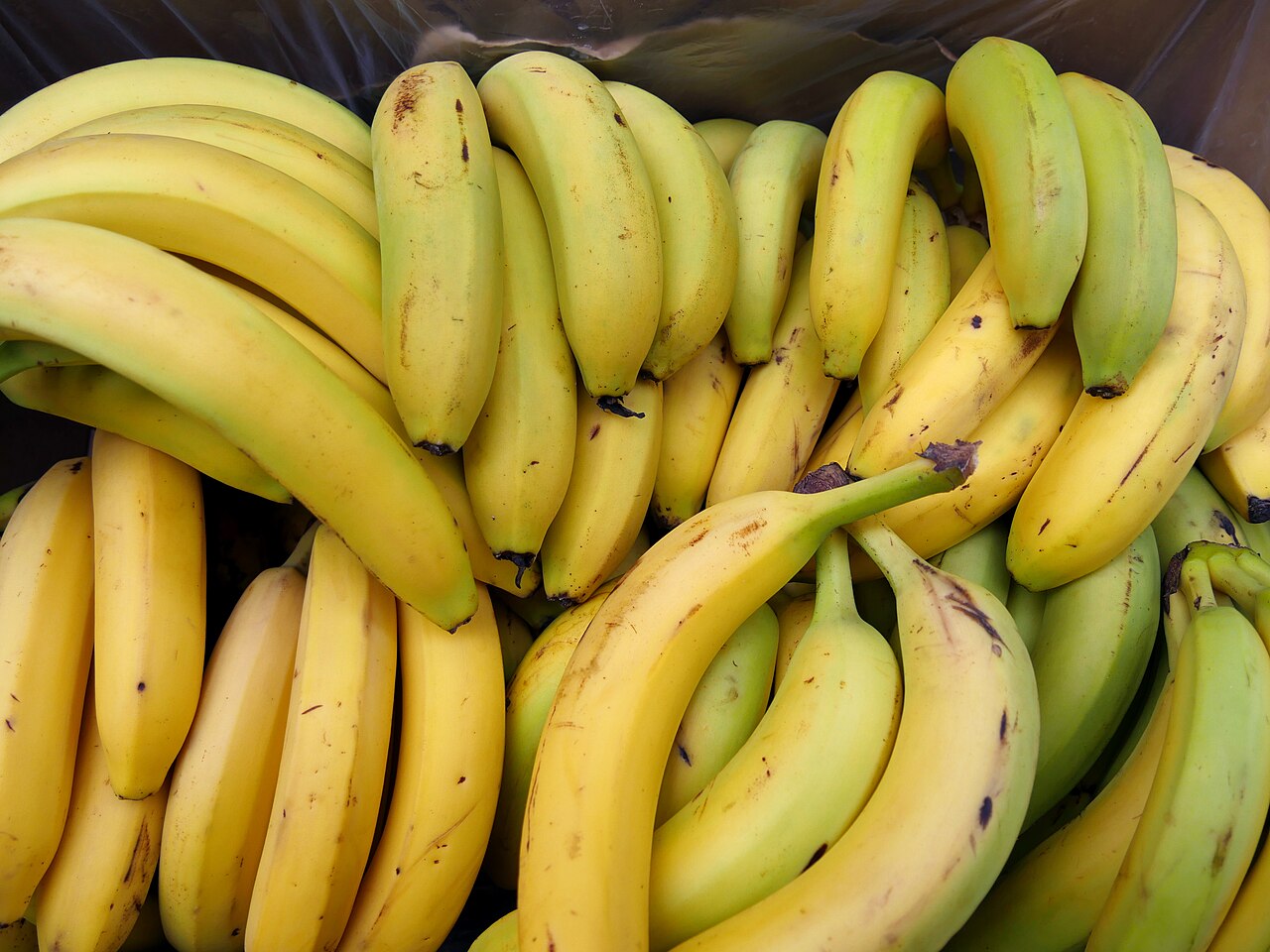
Almost no banana on the counter ripened on the plant. The colour you buy it at is decided by a ripening room, and you are not the one who programmes it.
It is cut green because there is no other way
A banana that ripens hanging on the plant splits and goes over before it reaches anywhere at all. That is why it is cut green, always, here and in Ecuador. What changes from one box to the next is the time that passes between the cut and the counter.
The Ministry of Agriculture has it measured in its study of the banana value chain: the Canary fruit takes between 9 and 12 days to reach the shop from the field. Imports from Africa add about 5 days more; from South America, between 12 and 15 more. Three or four weeks, and the fruit spends them green, alive and breathing inside a box at twelve or thirteen degrees.
The cut the fungus comes in through
At the packhouse the bunch is broken down: the hands are separated from the stalk with a cut. That cut is a wound and the wound is a door. What comes in through it is called crown rot, and the Canary Institute of Agricultural Research describes it as the disease of greatest incidence and severity in the post-harvest of the Canary banana.
The fungi that cause it live in the air and the water of any banana plantation in the world, and in the sheds where it is packed too. The symptoms can start during the sea crossing and only really show later, when the fruit is warmed to ripen. A black crown does not sell.
Against that the first thing is cleanliness: wash water in proper condition, disinfected surfaces, no fruit waste rolling around the shed. The ICIA writes that, and immediately afterwards writes the part almost nobody reads: even with those measures it is necessary, «in most cases», to act directly «through the systematic application of post-harvest fungicides».
What used to be applied, what is applied now, and who changed it
For more than fifteen years the reference active substance was imazalil. It stopped being so without any drama. In September 2019 the Commission cut its maximum residue level in bananas to 0.01 mg/kg, which is the limit of analytical quantification, with effect from 16 April 2020 and with no transitional period for this fruit. With that number over you, treating is impossible. Regulation (EU) 2019/1582 never writes the word ban; it leaves the substance nowhere to go.
What there is now in the Canaries, according to the same ICIA work, is azoxystrobin (Ortiva PC) and myclobutanil (Systhane 25), authorised as a result of that, plus the thiabendazole that was already available (Tecto 500 SC, Textar 60T). They are applied in the shed itself, by shower or by dipping the made-up bunches, before the box is closed.
It is worth stopping here, because this is the part that does not fit the easy story. There was a review, a problem turned up, the rule changed and the sector changed product. The system did its job. What never happened at any point is that somebody told you about it at the greengrocer's.
The ripening room: the colour is a commercial decision
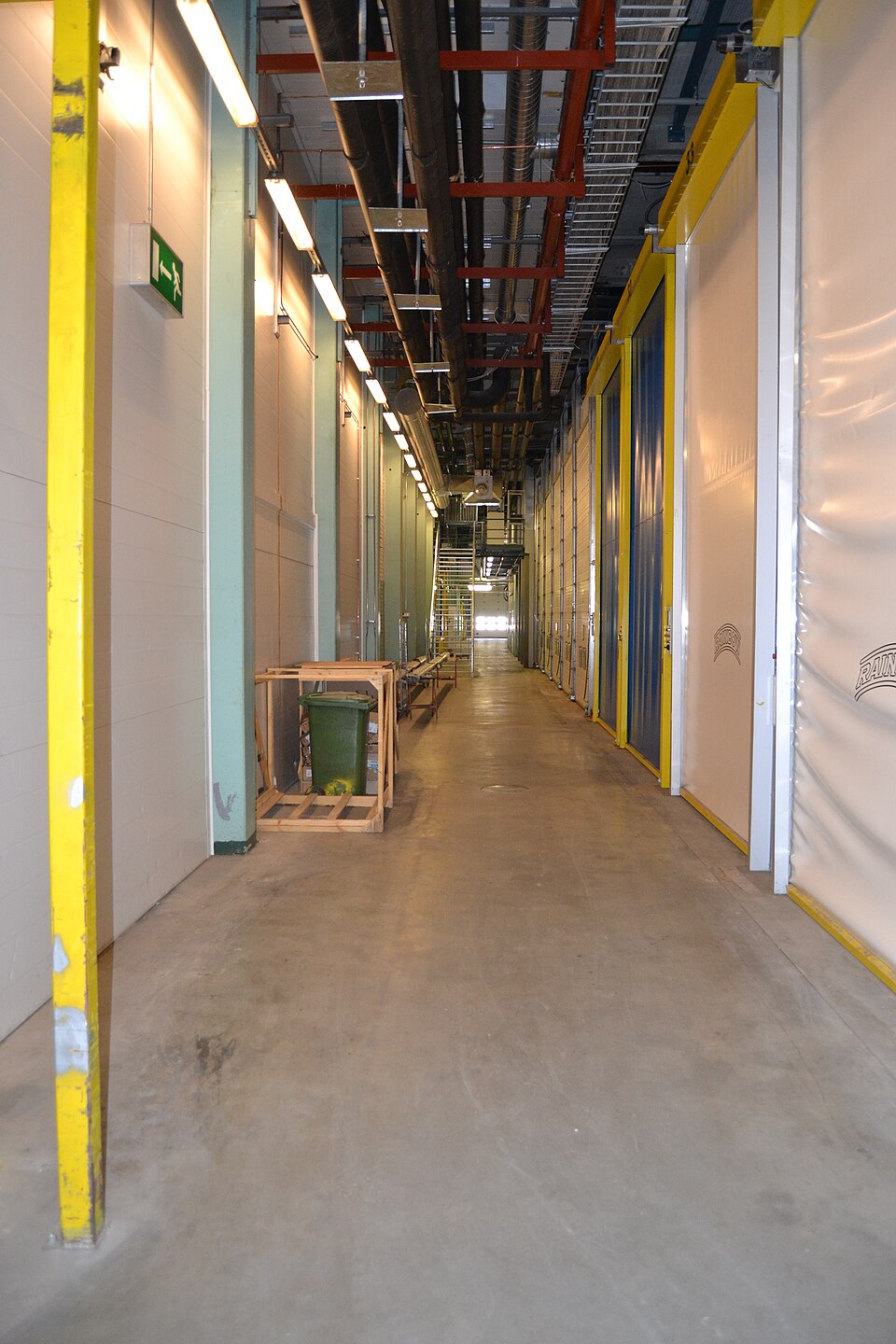
On arrival the green banana is unloaded into holding rooms, where it can sit between a week and ten days waiting its turn. When the sale calls for it, it goes into a ripening room and stays there four or five days, «depending on the degree of ripeness demanded by the customer». That phrase is verbatim from the Ministry's study: the exact shade of yellow you find it at was ordered by somebody.
Inside the room ethylene is injected, the same hormone the fruit makes on its own. The post-harvest sheets of the University of California (Davis) give the recipe: 100-150 ppm for 24 to 48 hours, at 15 to 20 °C. It is a starting gun, not a preservative, and afterwards the room is vented.
There is one detail that surprises almost everybody. The gas is authorised even in the strictest certified production the European Union recognises: Annex I of Implementing Regulation (EU) 2021/1165 lists ethylene with a condition of use written on one line, «only for bananas and potatoes». Anyone paying extra in the expectation of fruit ripened in the sun is expecting something else.
No law requires any of this
It is easy to assume the treatment is imposed by the border. It is not. The fruit of Musa is one of the very few the EU exempts even from the plant health certificate on entry, whatever country it comes from: it is in Part C of Annex XI of Implementing Regulation (EU) 2019/2072, on a short list it shares with the coconut, the date, the durian and the pineapple.
What pushes towards treatment is the journey, and the money lost when a ship arrives with black crowns. What holds it back is residue law, which is what saw off imazalil. Between those two forces it is decided what gets done to the fruit, and in that conversation there is no chair for whoever buys it.
From the label all you will get is the country: Implementing Regulation (EU) 543/2011 requires the origin to be given and asks for nothing else about the route. The exception is citrus, where treatments applied after harvest do have to be declared. On the banana, the apple or the onion, that line does not exist.
It is not wrong. It is done wrong some of the time
Nothing above is a scandal. Without the ripening room there is no banana in March in Burgos, and without the crown treatment part of every ship is thrown away. A packhouse that works clean and treats only what it must is doing its job properly. One that does not also exists, and the difference between the two does not show on the skin of the fruit.
That is why we always repeat the same thing, and it is a small thing: that the route should be written down. Where it came from, what day it was cut, how many days in the room it has had and what was applied to it in the shed. Four questions. At a counter they have no answer.
At a farm they do. 103 farms on this list publish their phone number, and the questions that work are written out for you in what to ask. The banana is a long way from almost all of them, granted; the onion, the tomato and the apple you buy that same week go through the same kind of shed and the same missing line on the label.
Carry on here
- Do you know why the potato you buy does not sprout?
- Do you know where it comes from and how long it has been in store?
- Do you know why the calçot is called a calçot?
- Do you know exactly what a comarca is?
- Do you know why a farm's tomatoes do not all come the same?
- Do you know where the word «payés» comes from?
- Do you know the same vegetable changes its name in 30 km?
- Guides
- Produce
Sources: ICIA / COPLACA / ASPROCAN — Assessment of the efficacy of authorised post-harvest products for the control of crown rot in bananas (in Spanish) (2026-08-15) · Ministry of Agriculture — Study of the value chain and price formation of the banana (July 2009): 9-12 days field to shop, 1 week to 10 days in holding, 4-5 days ripening (in Spanish) (2026-08-15) · Regulation (EU) 2019/1582 — imazalil MRL in bananas cut to 0.01 mg/kg from 16 April 2020, with no transitional period for the banana (2026-08-15) · UC Davis Postharvest Center — Banana: 100-150 ppm ethylene, 24-48 h, 15-20 °C (2026-08-12) · Implementing Regulation (EU) 2021/1165 — Annex I, entry 227 A: ethylene, «only for bananas and potatoes» (2026-08-15) · Implementing Regulation (EU) 2019/2072 — Annex XI, Part C: fruits of Musa L. exempt from a plant health certificate (2026-08-15) · Implementing Regulation (EU) 543/2011 — mandatory indication of origin and declaration of post-harvest treatments on citrus (Annex I) (2026-08-15)
This page is also in Castellano